What is ALS?
Our mission is to make each day the best possible day for people living with and affected by ALS.

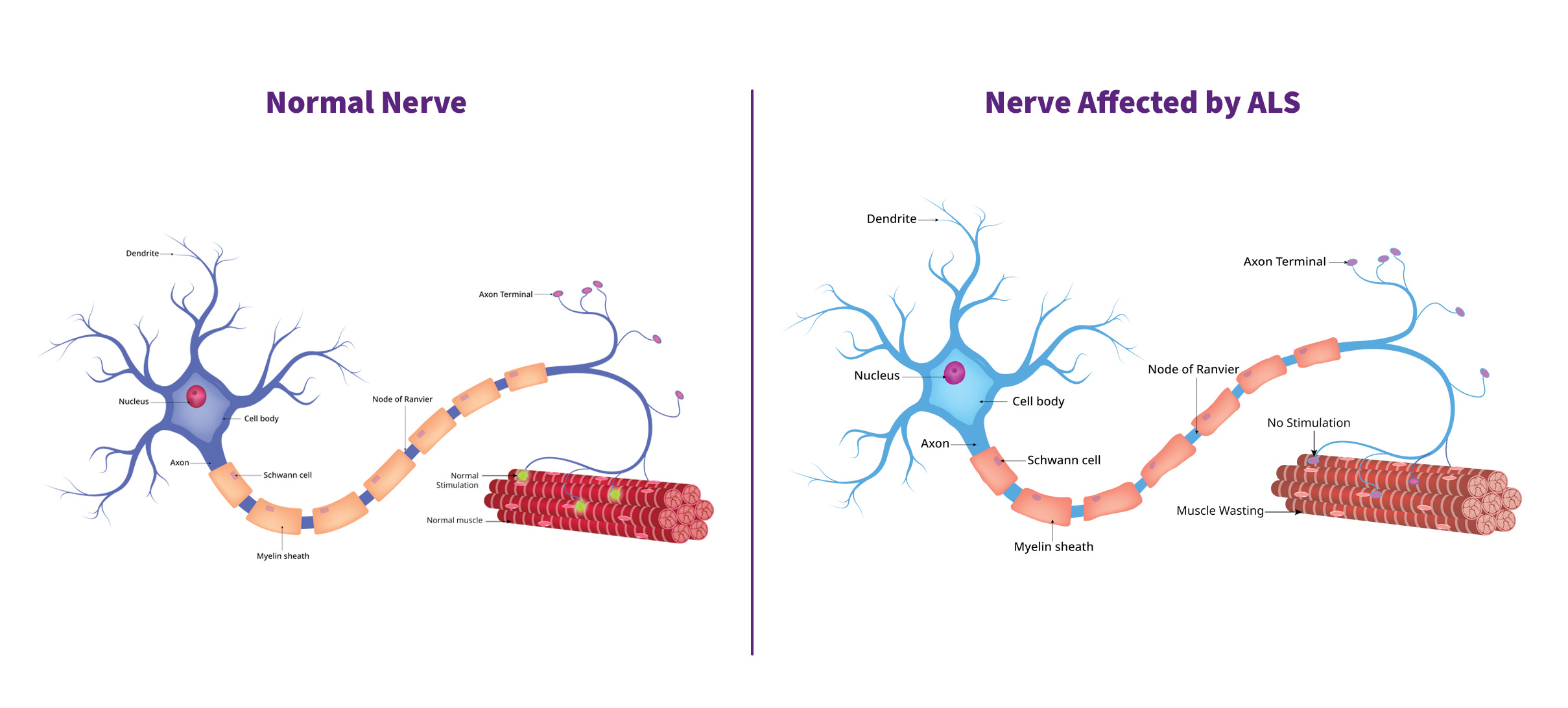
Amyotrophic Lateral Sclerosis (ALS) is a rapid, always fatal neurodegenerative disease. It attacks the nerves of the body that would normally send messages from the brain to the muscle, resulting in weakness and wasting. Eventually, the individual with ALS is left completely immobilized, with loss of speech and an inability to swallow and breathe.
The sensory neurons in people living with ALS continue to function normally, so they continue to feel the sensations of heat, cold, discomfort, etc. The mind often remains completely alert and lucid. The result is often a lively, unimpaired mind trapped in an immobilized body.
The average life expectancy from symptom onset is two to five years. The real challenge in the medical community is correctly diagnosing ALS in the early stages so that the ALS Society of Alberta is able to provide the maximum level of assistance to the person living with ALS and that person’s family.
Approximately 3,000 Canadians live with ALS and two to three Canadians die every day of ALS. There is no known cause or cure for this devastating disease – yet.


How do you get ALS?
Although ALS has been identified for more than 135 years, in the majority of cases, the cause is unknown. Research is being conducted in areas relating to biomarkers, genetic predispositions, viral or infectious agents, environmental toxins, stem cell research, and immunological changes. Some of this research is happening right here in Alberta.
How ALS affects the body.
Progressive paralysis of the voluntary muscles involved leads to loss of mobility, a decline in breathing function, difficulty eating and drinking by mouth, as well as speech problems such as slurring and low volume output. Not every person with ALS will experience all symptoms or have all areas of the body affected during their course of illness. ALS is usually, but not always, fatal within two to five years after diagnosis; however, there are several options available to help manage the disease and preserve the quality of life. Some cognitive abilities may also be affected (30-50 percent of cases), but ALS does not usually involve loss of sensory function – taste, touch, sight, smell, and hearing.

Symptoms of ALS.
The symptoms and the area of the body first affected can vary from person to person. Typically, ALS involves muscle weakness, fatigue, wasting, stiffness, loss of tone, cramping, twitching, and hyper- and hypo-reflection. The onset of the disease may occur in nerves associated with muscles of the upper or lower limbs, the throat, or the upper chest area. In rare cases, the muscles involved in breathing are first affected. These symptoms can result in decreased coordination in the hands, tripping and falling, weight loss, and difficulty swallowing, speaking, or breathing.
- Muscle Weakness
- Loss of tone
- Fatigue
- Cramping
- Decreased Cordination
- Stiffness
- Weight Loss
- Difficulty Speaking
- Tripping
- Difficulty Swallowing
- Difficulty Breathing
Help us fulfill our mission.
Even the smallest donation can make a large impact on somebody affected by ALS.
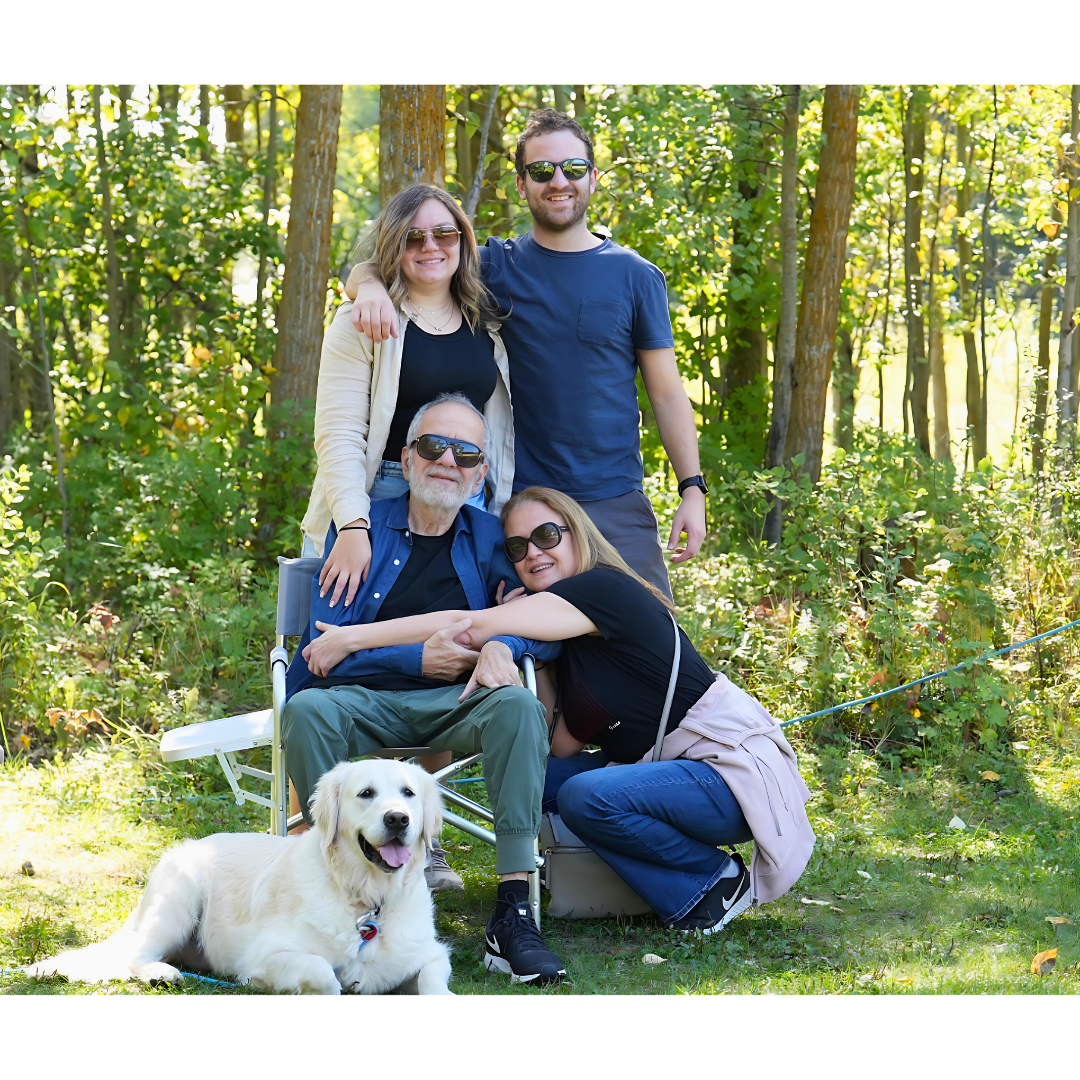
Hashem’s story
Even in the face of ALS, life continues to offer beautiful gifts.
Hashem’s story is one of resilience, family, and finding meaning while living with ALS. It’s a reminder that even in uncertainty, moments of love and connection still shine through.

ALS FAQs.
Who can get ALS?
ALS can strike anyone. ALS is not contagious, does not discriminate, and can occur at any age. ALS most often occurs between the ages of 40 and 70, but can also occur in older and younger adults, and rarely in teenagers. ALS is a terminal disease, with most people passing away fatal within two to five years of diagnosis. There is a hereditary pattern in about five to 10 percent of cases.
What are early symptoms?
The symptoms and the area of the body that are first affected vary from person to person. Typically, ALS involves muscle weakness, fatigue, wasting, stiffness, loss of tone, cramping, twitching, and hyper- and hypo-reflection. The onset of the disease may occur in nerves associated with muscles of the upper or lower limbs, the throat, or the upper chest area. In rare cases, the muscles involved in breathing are first affected. These symptoms can result in decreased coordination in the hands, tripping and falling, weight loss, and difficulty swallowing, speaking, or breathing.
What may cause ALS?
Although ALS has been identified for more than 135 years, in the majority of cases, the cause is unknown. Research is being conducted in areas relating to biomarkers, genetic predispositions, viral or infectious agents, environmental toxins, stem cell research, and immunological changes. A significant portion of this promising research is happening right here in Alberta.
What are the effects of ALS?
Progressive paralysis of the voluntary muscles involved leads to loss of mobility, a decline in breathing function, difficulty eating and drinking by mouth, as well as speech problems such as slurring and low-volume output. Over time, as the muscles of the body weaken, someone living with ALS will lose the ability to walk, talk, eat, swallow, and eventually breathe. Not every person with ALS will experience all symptoms or have all areas of the body affected during their course of illness.
Is there a cure?
Simply, no, there is no known cure and no treatment that prolongs life significantly. Some drugs that are now available and others being developed will offer new treatment options. Research is investigating ways to slow, manage and eventually reverse the disease. The ALS Societies across Canada are working tirelessly to isolate a cause and eventually a cure for ALS.